Why do Tarot Readers Also use Oracle Cards
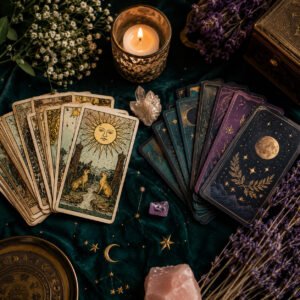
If you spend any time around tarot readers, one thing becomes clear quite quickly, and that is that very few of us ever work with just one deck.
More often than not, alongside a tarot deck, there will be an oracle deck sitting nearby, sometimes quietly, sometimes playing a much bigger role in the reading itself, and once you start to notice it, you begin to wonder why. Tarot already offers structure, symbolism, and depth, so what exactly are oracle cards adding to the experience, and where did they come from in the first place?
Tarot, as we know, has a long and well documented history, beginning in fifteenth century Europe as a card game before gradually evolving into the symbolic and intuitive tool that we recognise today. Its structure has remained remarkably consistent, with seventy eight cards divided into the Major and Minor Arcana, and each card carrying layers of meaning that have been explored and expanded over generations.
Oracle cards, however, do not come from a single defined system in the same way, and they are a much more modern development. Their roots can be traced back to earlier traditions of prophecy and inspired writing, particularly texts such as The Sibylline Oracles, which were believed to contain messages of guidance and insight. Over time, as spiritual and personal development practices evolved, this idea of receiving direct, intuitive messages began to take a more accessible form, eventually becoming the themed oracle decks we recognise today.
What makes oracle cards different, and ultimately what makes them so appealing, is that they are not bound by rules. There is no fixed number of cards, no shared structure, and no single system that every reader must follow, which means each deck is free to express its own voice and perspective. Some are gentle and reassuring, others are direct and grounding, and some feel almost poetic in the way they communicate, but all of them offer a level of flexibility that tarot does not always prioritise.
This is where the real value begins to show.
Tarot is naturally layered, and it invites you to explore a situation in depth, looking at influences, patterns, and possible outcomes, often revealing far more than you expected when you first laid the cards down. It is thoughtful, reflective, and incredibly powerful, but it can also feel quite structured, both in its meanings and in its visual language, particularly when working with more traditional decks.
Oracle cards approach things differently.
Rather than analysing every aspect of a situation, they tend to move straight to the heart of the message, offering clarity in a way that feels immediate and easy to take in. They might highlight what matters most, provide reassurance when it is needed, or simply bring your attention back to something you already know but have perhaps been overlooking.
For many readers, this creates a natural balance within a reading.
Where tarot gives you the full picture, with all of its layers and nuances, oracle cards offer a sense of focus, almost like stepping back and asking what stands out most clearly once everything has been laid out in front of you. It is less about adding more information and more about refining the message into something that feels clear and meaningful.
Another important reason many readers are drawn to oracle cards is the level of freedom they allow within interpretation. If something in the imagery stands out, or a particular word or phrase feels significant in that moment, you are able to follow that instinct without feeling as though you are stepping outside of a defined system. In that sense, oracle cards encourage you to trust your own intuition more fully, rather than relying entirely on traditional meanings, and for many people that feels both refreshing and empowering.
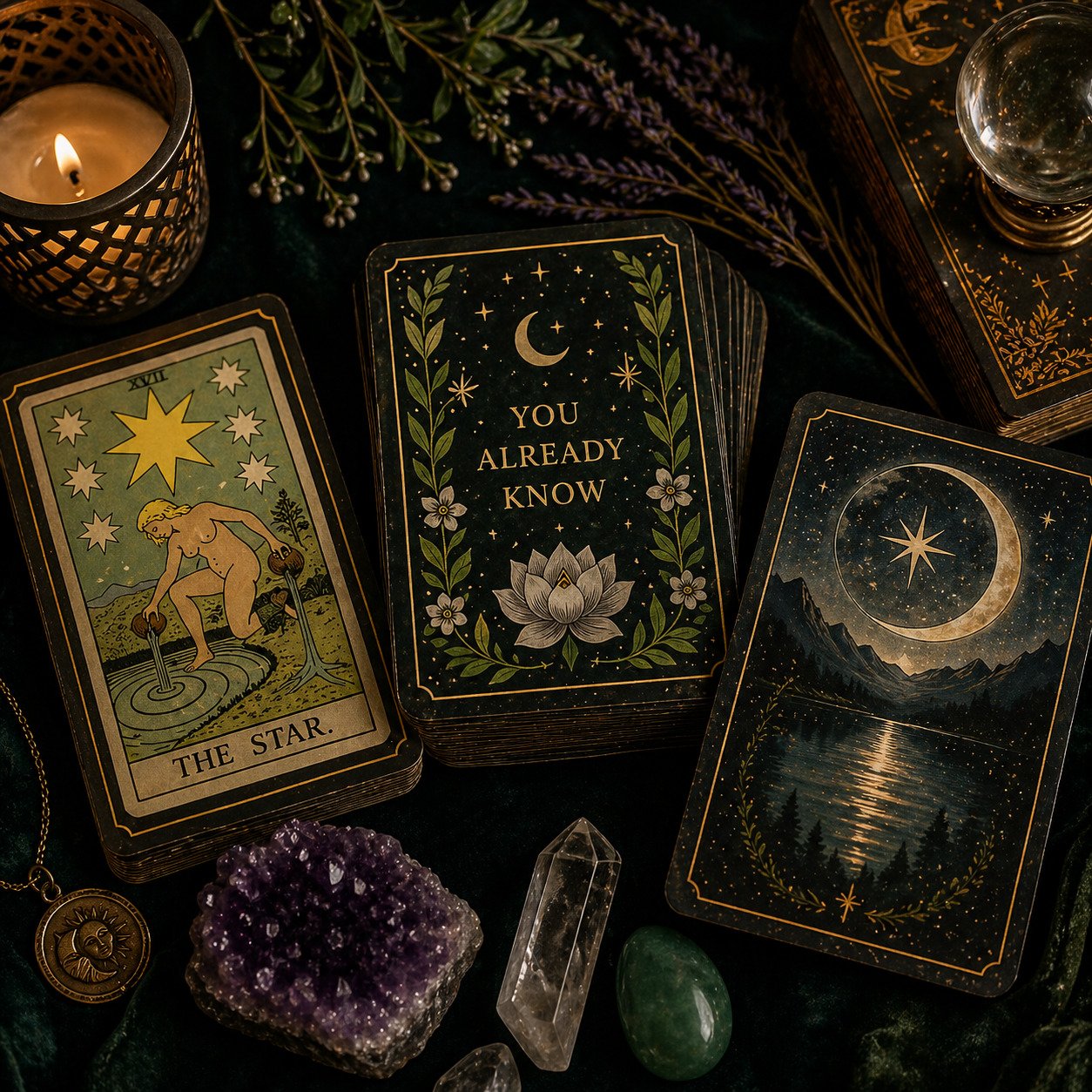
There is also something to be said for the visual experience of working with different decks, because while tarot is rich in symbolism and meaning, it can sometimes feel quite set in how it presents itself. Oracle decks offer a huge range of artistic styles and themes, which means you can choose something that genuinely resonates with you on a personal level. Whether that is something soft and calming, nature based, celestial, or more expressive and modern, having a deck that reflects your own taste can lift the mood of a reading and make the experience feel more inviting, creating a space that feels aligned, comfortable, and even a little bit inspiring.
In practice, tarot readers use oracle cards in a variety of ways, and there is no single approach that works for everyone. Some will begin a reading with an oracle card to establish the tone, allowing that initial message to guide the interpretation of the tarot spread that follows, while others prefer to draw one at the end as a way of bringing everything together into a single, clear takeaway. There are also readers who use both side by side throughout the reading, moving between tarot and oracle as the situation unfolds, allowing intuition to lead the process rather than following a fixed structure.
It is easy to assume that oracle cards are mainly for beginners, particularly because they often present their messages in a more direct and accessible way, but that is not really the full picture. While they can be a wonderful starting point, especially if tarot feels overwhelming at first, they are used just as often by experienced readers who appreciate the clarity and simplicity they bring. Even after years of reading tarot, there are moments when a clear, direct message is exactly what is needed, and oracle cards are particularly good at providing that.
So, should you use oracle cards?
The honest answer is that you do not need to. Tarot on its own is more than capable of providing deep and meaningful readings, and many readers choose to work exclusively with tarot throughout their practice. However, if you find yourself wanting a slightly different perspective, or if you feel that your readings would benefit from a clearer sense of focus or closure, then oracle cards are well worth exploring.
They do not replace tarot, and they are not intended to.
Instead, they sit alongside it, offering a different voice, a different tone, and sometimes a message that feels just a little easier to take in. If you are curious, the simplest way to begin is to keep your tarot practice exactly as it is, and then add a single oracle card at the end of your reading, asking what you most need to take away from the experience.
You may find that it brings everything together in a way that feels surprisingly complete.
And if it does not, that tells you something too, because ultimately this is not about following rules or using every available tool, but about finding what works for you and building a practice that feels both natural and meaningful.